

If you’ve ever walked into a Tokyo department store in early July and wondered why everything is suddenly half price, you’ve stumbled onto one of the country’s two big clearance seasons. So when are sales in Japan, exactly? The short answer is that the calendar is surprisingly predictable: two major clearance seasons (summer and winter), a famous New Year blowout built around lucky bags, and a handful of smaller windows tied to bonuses, the fiscal year, and seasonal model changes. Once you know the rhythm, you can plan big purchases around it instead of paying full price by accident.
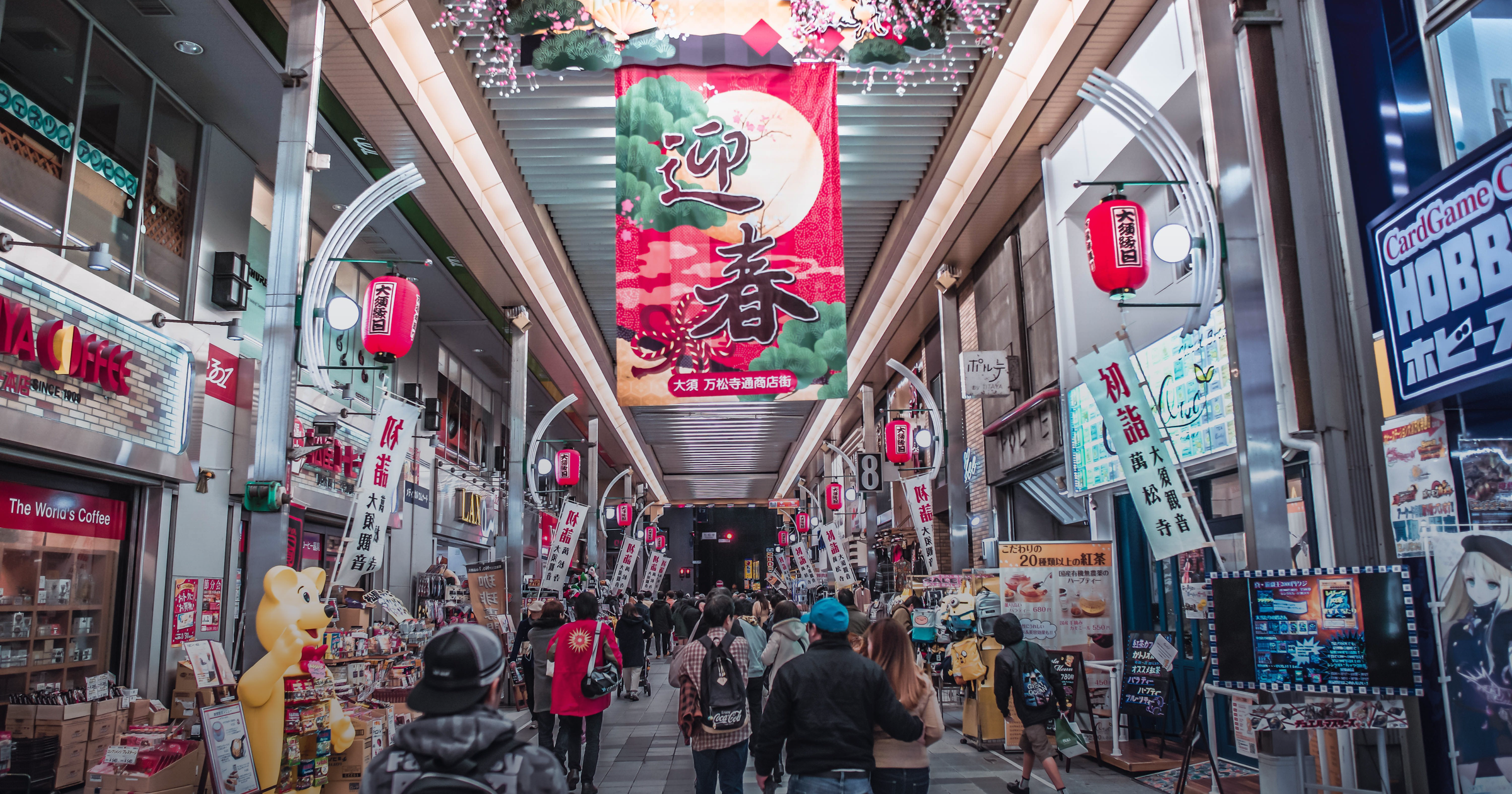
This guide is a true year-round planner, not just a New Year piece. We’ll walk through a month-by-month sale calendar, break down the fukubukuro lucky bags strategy, and finish with tips most tourist articles skip: how residents stack seasonal sales with point campaigns and end-of-season clearance to save all year. Timings below reflect how the seasons typically run; exact dates shift slightly each year and by store, so confirm with the retailer before you go. Shopping streets fill up during the New Year hatsu-uri season, the calendar’s single biggest shopping event.
Key takeaways
- Japan’s two main clearance seasons are summer (late June through July) and winter (peaking January, deepest in February).
- The hatsu-uri New Year sale starts January 2 (some flagships January 3) and features fukubukuro lucky bags.
- Buy electronics during fiscal-year clearances in March (largest) and September, plus just after new-model changeovers.
- Japanese online sales lean on point rewards; a 10x points campaign equals roughly a 9% discount once redeemed.
The two big sale seasons in Japan: summer and winter
Most of Japan’s retail discounting clusters into two main clearance seasons, driven by the wardrobe changeover and by corporate bonus payouts that put extra cash in shoppers’ pockets.
The summer sale (natsu no sale) typically kicks off in late June and peaks from late June through mid-July, with markdowns continuing toward the end of July. In 2026, several major department stores including Isetan and Mitsukoshi begin their in-store summer sales around Friday, June 26. This is when summer clothing, swimwear, sandals, and cooling goods get aggressively discounted, often 50% or more as the season progresses and stores need to clear shelves for autumn stock. Outlet malls tend to run a little later, into late July and early August, timed to catch the Obon holiday travel crowd. Visiting from overseas? At many department stores you can stack these markdowns with tax-free shopping on the same purchase, shaving off the consumption tax on top of the sale price.
The winter sale (fuyu no sale) is the other heavyweight. Year-end clearance starts in December, then the season truly explodes around New Year with the hatsu-uri (first sale of the year) and lucky bags. Winter discounting peaks from early to late January, when coats, knitwear, boots, and heating appliances are marked down hard. February then becomes prime hunting ground for the deepest winter clearance, as stores dump whatever is left before spring inventory lands.
Month-by-month sale calendar for Japan
Here’s the full year at a glance. Use it to time purchases: buy seasonal goods at the end of their season, and big-ticket appliances around fiscal-year and bonus windows.
| Month | What’s typically on sale | Why it happens |
|---|---|---|
| January | Lucky bags (fukubukuro), winter apparel, electronics, broad New Year deals | Hatsu-uri New Year sale; the year’s single biggest shopping event |
| February | Deepest winter clearance: coats, knitwear, boots, heaters | Final markdowns to clear winter stock before spring arrivals |
| March | Home appliances, furniture, daily goods; some electronics | “New life” season plus fiscal year-end (kessan) sales at many retailers |
| April | Household goods, furniture, spring apparel | New job/school season drives moving-related purchases |
| May | Spring and early-summer clothing, games, leisure goods | Golden Week holiday promotions and event sales |
| June | Large TVs, air conditioners, major appliances; summer sale begins late month | Summer bonus season spending; clearance starts late June |
| July | Summer clothing, swimwear, sandals, cooling appliances | Peak summer clearance, one of the two biggest sale seasons |
| August | End-of-summer markdowns, outlet bargains | Obon-timed outlet sales and final summer clear-outs |
| September | Seasonal appliances (fans, AC), older-model electronics | Mid-year fiscal close (kessan); summer-demand stock cleared |
| October | Outdoor and camping gear, autumn apparel, post-Halloween items | Seasonal transition; Halloween goods slashed after Oct 31 |
| November | Electronics, fashion, home goods, groceries | Black Friday and “good shopping day” (11/11) online events |
| December | Winter wear, heaters, gifts, jewelry, limited editions | Christmas, year-end clearance, and pre-New-Year promotions |
A useful mental model: summer and winter are the clearance seasons (best for apparel), while March and September are the fiscal seasons (best for appliances and electronics, because many retailers’ books close then and they push to hit targets).
Hatsu-uri and New Year sales: the year’s biggest event
The hatsu-uri New Year sale is the marquee shopping moment in Japan. Most department stores and malls close on January 1 and open for their official first sale on January 2. A few flagship stores start a day later; in 2026, for example, Daimaru Tokyo, Takashimaya, and Matsuya Ginza are slated to begin on January 3. Outlet malls are the exception and often trade as normal on January 1.
Hatsu-uri carries a cultural meaning beyond pure bargain-hunting; the first purchase of the year is associated with wishing for good fortune. Expect crowds, prize draws, point-up promotions, and the main attraction, fukubukuro.
Fukubukuro lucky bags strategy
Fukubukuro lucky bags are sealed mystery bags sold at the start of the year, usually filled with goods worth more than the price you pay. They’re the headline draw of the New Year sale, and the value plus the thrill of not knowing what’s inside make them genuinely fun. Here’s how to play it smart.
Reservation vs walk-in
The way fukubukuro are sold has shifted in recent years. Many popular bags now sell out via advance reservation through store websites or apps, sometimes by lottery, with announcements typically starting in November (some brands as early as late October) and running through December. If there’s a specific brand bag you want, treat early November as your cue to start checking; the most sought-after bags rarely make it to the shop floor.
Walk-in is still very much alive, especially at department stores and large chains, but it means lining up early on January 2 (or 3). Popular bags can be gone within minutes of opening, so arrive before the doors open if a specific item is your goal. The trade-off is simple: reservations reduce the risk of missing out but require planning weeks ahead; walk-ins are spontaneous but competitive.
Where to buy beyond department stores
Department stores are the classic source, but fukubukuro have spread far beyond them. You’ll find lucky bags at:
- Cafe and food chains such as Starbucks and Mister Donut, which release coffee-and-goods or sweets bags that often require reservation or lottery entry.
- Apparel chains like Uniqlo and Shimamura, popular for predictable, practical clothing value.
- Electronics retailers such as Bic Camera and Yodobashi, where bags can contain gadgets, accessories, or appliances.
- Hobby, anime, and specialty shops, where character goods and collectibles make bags especially desirable to fans.
One practical tip: read the fine print. Some modern “lucky” bags now publish their contents in advance or let you choose sizes and colors, which removes the gamble but also the mystery. Decide which experience you actually want before you commit.
Electronics and appliance cycles: time the model changeover
For big-ticket electronics and home appliances, the calendar matters even more than the sticker. Two forces drive the best prices: fiscal-year clearances and new-model changeovers.
- March is the fiscal year-end (kessan) for many retailers, and these end-of-year sales are often larger than the mid-year ones because they align with the new business year.
- September is the mid-term fiscal close, when seasonal appliances that have served summer demand, plus older models awaiting replacements, get pushed out aggressively.
- June bonus-season sales make large TVs and air conditioners attractive, since stores ride the wave of summer bonus spending.
- Model changeover is the quiet hero. When a new model lands, the outgoing version is discounted sharply despite being nearly identical. Rice cookers, microwaves, air purifiers, and vacuums commonly refresh between roughly July and October, so the previous generation is excellent value then.
If you don’t need the absolute newest spec, buying last year’s model right after a refresh is one of the most reliable ways to save on electronics in Japan.
Black Friday and online sale events
Black Friday has taken root in Japan but doesn’t follow the U.S. calendar rigidly. Each retailer sets its own window, with most events landing in the third and fourth weeks of November. Aeon, for instance, runs an extended late-November event, while Amazon Japan typically discounts for roughly a week from late November into early December’s Cyber Monday. Rakuten runs its own large seasonal promotions, including a “Super Sale” held each quarter (typically March, June, September, and December).
A key cultural difference: Japanese online sales lean heavily on point rewards rather than only headline price cuts. A “10x points” campaign can effectively be a 9% discount once you redeem the points, so don’t judge a Japanese sale by the percentage-off banner alone. Look at the points multiplier too.
The resident’s edge: stacking sales, points, and clearance
Most sale guides are written for tourists chasing a single shopping trip. If you actually live in Japan, your real advantage is stacking across the whole year. Here’s how residents quietly save more than visitors.
- Buy at the end of each season, not the start. Pick up next winter’s coat in February clearance, next summer’s fans in September. You wait a few months to wear it; you pay a fraction of the price.
- Stack point campaigns on top of sale prices. Department-store summer and winter sales frequently run alongside point-up campaigns and coupons. Pay through a platform running a bonus (Rakuten Pay, PayPay, or a store’s own app) during these windows and you compound the discount with points you’ll spend later.
- Treat March and September as appliance windows. Plan replacements for aging appliances around the fiscal sales rather than buying reactively when something breaks.
- Watch model-changeover months for the gear you want. If your vacuum or rice cooker is on its last legs, hold out for the post-refresh discount on last year’s model.
- Layer Black Friday and 11/11 online events with point multipliers for non-perishables and gifts you’d buy anyway.
The principle is simple: a sale price is the floor, not the ceiling, of your savings. Residents who add points, coupons, and seasonal timing on top routinely beat the advertised discount. Seasonal sales are just one lever, too; pairing them with year-round schemes like furusato nozei (hometown tax) stretches a resident’s budget even further.
It also pays to think in terms of a rolling annual list. Keep a running note of items you know you’ll need eventually, then check it against the calendar above. A heater you’ll want next December is cheapest in February; a fan for next August is cheapest in September. Because you live here, you can afford to wait for the right window instead of buying at full price the moment a need appears. Over a year, that patience adds up to real money, and it costs you nothing but a little planning.
FAQ
When are the biggest sales in Japan?
The two largest clearance seasons are summer (late June through July) and winter (late December through January). The single biggest single event is the New Year hatsu-uri, which begins on January 2 or 3 and features fukubukuro lucky bags.
When do summer sales start in Japan?
Summer sales typically begin in late June and peak from late June through mid-July. In 2026, major department stores such as Isetan and Mitsukoshi start in-store summer sales around June 26, with outlet malls running a bit later into late July and August.
Do I need a reservation for fukubukuro?
It depends on the bag. Many popular lucky bags now require advance reservation or lottery entry, with announcements starting in November (some as early as late October). Plenty of bags are still sold walk-in on January 2 or 3, but the most coveted ones often sell out quickly, so reserving is safer if you have your heart set on a specific item.
When is the best time to buy electronics in Japan?
Aim for fiscal-year clearances in March (the largest for many retailers) and September, the June bonus-season sales for large appliances, and the months just after a new model launches, when last year’s version is discounted while still nearly identical.
Is Black Friday a big deal in Japan?
It’s growing. Most retailers run Black Friday events in the third and fourth weeks of November, but discounts lean on point rewards as much as price cuts, so factor in the points multiplier when comparing deals.
Conclusion
So, when are sales in Japan? Year-round, if you know where to look: summer and winter for clearance, the New Year hatsu-uri and fukubukuro for the headline event, March and September for appliances, and November for online Black Friday deals. Tourists can ride a single season; residents can stack seasonal timing, point campaigns, and end-of-season clearance to save all twelve months. Bookmark the month-by-month table above, confirm exact dates with your favorite stores each year, and let the calendar do the bargaining for you.


[…] timing a trip, it’s worth lining it up against the broader discount calendar — our guide to when sales happen in Japan in 2026 maps how these travel campaigns sit alongside the country’s wider seasonal sale […]