

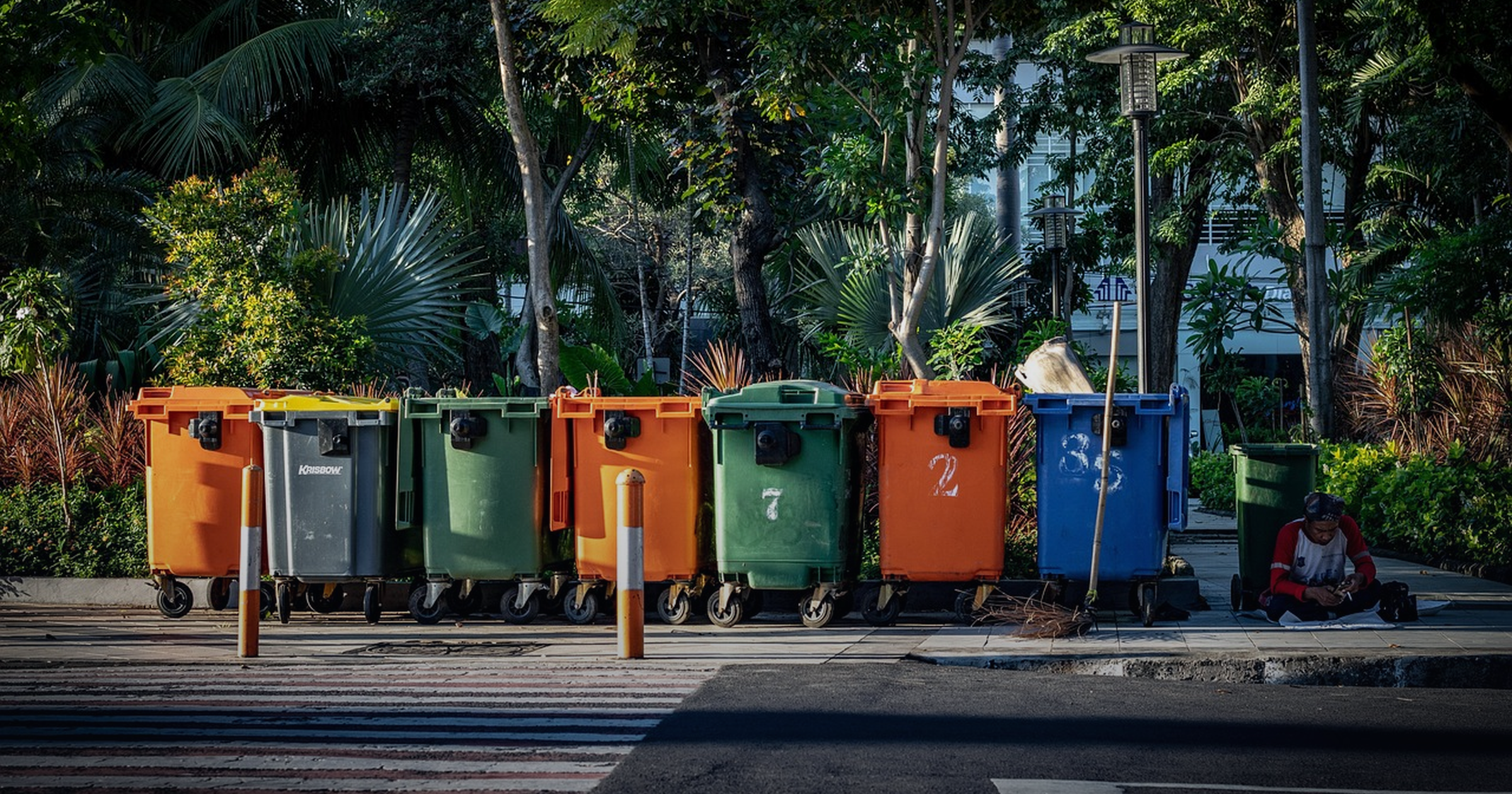
Figuring out how to throw away trash in Japan is one of the first real tests of settling in, and it trips up almost every new resident. Back home, you probably had one bin and one pickup day. Here, your household waste gets split into burnable, non-burnable, several recycling streams, oversized bulky items, and a handful of appliances that are illegal to put out as trash at all. Get it wrong and your bag may be left on the curb with a bright sticker on it, or you could face an unexpected fee. The good news: once you understand the logic, it becomes routine. This guide walks you through a single decision-flow so you always know where any item belongs.
Key takeaways
- Household waste splits into five paths: burnable, recyclables, oversized garbage, appliance recycling, and PC recycling.
- Your local municipality sets exact categories, bag rules, and fees, so always confirm where you live.
- Items over ~30 cm are sodai gomi, needing a booking plus a convenience-store sticker costing about ¥200–¥1,000.
- TVs, fridges, washers, and air conditioners fall under the Home Appliance Recycling Law and can’t go in normal trash.
Start Here: One Question Decides Everything
Before you do anything else, ask yourself one thing: what exactly am I throwing away? The answer routes you down one of five paths. Each path has its own rules, its own bag or sticker, and its own collection day.
- Everyday household waste → burnable or non-burnable garbage
- Bottles, cans, PET, paper → recyclables (sorted separately)
- Large furniture or items over ~30 cm → oversized garbage (sodai gomi)
- TV, fridge, washing machine, air conditioner → Home Appliance Recycling Law (a completely separate process)
- Computers and laptops → PC recycling (yet another separate process)
The single most important thing to internalize: paths 4 and 5 are not trash. You cannot legally put a refrigerator or a TV out with normal garbage, and you usually can’t book them as sodai gomi either. We’ll cover that trap in detail below, because it’s the mistake that costs people the most.
The Golden Rule: Your Municipality Sets the Rules
One thing applies to every section of this article: the exact rules, categories, bag requirements, and fees are decided by your local municipality (your ward, city, town, or village), not by a single national standard. What counts as burnable in one ward may be non-burnable in the next. Designated bags are mandatory in some cities and not used in others. Even the size that defines “oversized” varies.
So treat everything below as the general framework, then confirm the specifics for where you live. To find your local rules:
- Search “[your city name] gomi (ごみ) separation guide” or look on your city or ward’s official website. Many publish English, Chinese, and Korean guides.
- Pick up the printed sorting calendar and pamphlet from your ward or city office when you register your address. Many also offer a free garbage-sorting smartphone app.
- Ask your building manager or real estate agent for the collection schedule posted at your building’s trash area.
Path 1: Burnable and Non-Burnable Garbage
This is your day-to-day waste, and it’s split into two streams. Understanding burnable vs non-burnable garbage in Japan covers the vast majority of what leaves your home each week.
Burnable garbage (可燃ごみ / 燃えるゴミ)
Burnable waste is anything that can be safely incinerated. In most areas this includes:
- Food scraps and kitchen waste (drain off excess liquid first)
- Used tissues, paper towels, and soiled paper that can’t be recycled
- Small wood items, chopsticks, and natural fibers
- In many municipalities, certain soft plastics and food wrap, though some areas collect plastic separately, so check locally
Burnable garbage is collected most frequently, typically about twice a week, though some areas collect it more often.
Non-burnable garbage (不燃ごみ / 燃えないゴミ)
Non-burnable waste is items that shouldn’t be incinerated, typically:
- Metal items like pots, pans, cutlery, and umbrellas
- Glass and ceramics such as drinking glasses, mugs, broken plates, and mirrors
- Small electrical appliances like toasters, kettles, and hair dryers (where local rules allow)
Non-burnable garbage is collected far less often, frequently just once or twice a month (some areas collect it weekly), so check your calendar.
Two safety rules that catch people out
- Broken glass and sharp items: wrap them in thick paper, place them in your non-burnable bag, and write “危険” (kiken, meaning “dangerous”) on the outside so collectors know.
- Aerosol cans and gas cartridges: many areas require you to fully empty them and put them out separately, often in a clear bag beside the regular trash, never punctured indoors.
In cities that require designated garbage bags (shitei gomi-bukuro), you must buy the official bags, sold at supermarkets and convenience stores, and use the correct bag for each category. Non-official bags may not be collected. Paid designated bags are the norm across most of Japan, but not everywhere; Tokyo’s 23 wards, for example, don’t use a paid-bag system and accept any transparent or semi-transparent bag, which is exactly why you should confirm your own city’s rules (Shinjuku City’s official multilingual garbage guide is a good model of what a ward publishes). Always set garbage out on the morning of the correct day, usually before 8:00 a.m., not the night before.
Path 2: Recyclables (PET, Cans, Bottles, Paper)
Recyclables are pulled out of your trash and sorted into their own streams. Rinse containers before putting them out, since dirty items can be rejected.
- PET bottles (ペットボトル): remove the cap and label (these often go with plastics), rinse, and lightly crush. Many stations have a dedicated PET bottle cage or net.
- Cans (缶) and glass bottles (ビン): rinse and sort. Some areas separate aluminum from steel, and glass by color.
- Paper and cardboard (古紙): flatten cardboard, and bundle newspapers, magazines, and cardboard separately, usually tied with string. Milk and juice cartons are often rinsed, opened flat, and dried.
- Plastic packaging (プラ): in many municipalities, clean plastic wrappers and containers marked with the プラ symbol go in their own collection.
Each recyclable type often has its own collection day, so your calendar is your best friend here.
Path 3: Oversized Garbage (Sodai Gomi)
If you’re wondering about sodai gomi how to handle it, this is the path for furniture and large items that won’t fit in a standard bag. In most municipalities, anything larger than roughly 30 cm on any side counts as oversized garbage, though some areas use a 50 cm threshold, so confirm locally (this oversized garbage guide walks through typical thresholds and fees). Typical sodai gomi includes desks, chairs, bookshelves, sofas, futons, bicycles, and suitcases.
This is also where the oversized garbage Japan disposal sticker system comes in. You can’t just put a desk on the curb. The standard process has four steps:
- Book a pickup. Contact your municipality’s oversized garbage center (sodai gomi reception center) by phone or, increasingly, through an online form. Many cities now offer the online form in English, Chinese, and Korean. You’ll describe the item and receive a fee quote and a scheduled collection date, often one to three weeks out.
- Buy the disposal sticker. Take your quote to a convenience store (7-Eleven, FamilyMart, Lawson, and others) and ask for a sodai gomi shori-ken (粗大ごみ処理券), the oversized waste disposal ticket. The clerk keeps these behind the counter. Buy stickers totaling the quoted amount. Payment is typically cash only. One catch many people miss: buy the stickers at a store inside your own city or ward, because the tickets generally aren’t valid across municipal boundaries.
- Label the item. Write your name or the reservation number on the sticker (as instructed) and stick it firmly to the item.
- Put it out. Place the item at the designated spot on your scheduled morning, usually before 8:00 a.m.
How much does sodai gomi cost?
Fees depend on the item and your municipality, but a common range is roughly ¥200 to ¥1,000 or more per item, with larger pieces like sofas or mattresses sometimes running to a few thousand yen. A futon might be a few hundred yen, while a large desk or sofa costs more. The convenience-store stickers commonly come in small denominations (for example, around ¥200 to ¥300 each), so you may buy several to reach the quoted total.
Path 4: The Big Trap, Home Appliances You Can’t Throw Away
Here’s the rule that surprises almost everyone. Four categories of home appliances are governed by Japan’s Home Appliance Recycling Law (Kaden Recycle Ho, in force since 2001; see this overview of the law), and they cannot go in normal trash and usually cannot be booked as sodai gomi either:
- Televisions
- Refrigerators and freezers
- Washing machines and clothes dryers
- Air conditioners
By law, the manufacturer recycles these items and the consumer pays the cost. So how do you dispose of these appliances? You have a few legitimate routes:
- Buy a replacement: the retailer selling you the new appliance will usually collect the old one and handle recycling for a fee.
- Return to the original store: the shop where you bought it is generally obligated to take it back.
- Do it yourself: obtain a Home Appliance Recycling Ticket (kaden recycle-ken) at a post office for the correct manufacturer and item, pay the recycling fee, attach the ticket, and bring the item to a designated collection site. You can find the list of sites through the appliance recycling association.
What does appliance recycling cost?
There are two separate charges: the recycling fee (set per item, and varying by manufacturer, TV screen size, and fridge volume) plus a collection and transport fee if someone picks it up for you. As a rough guide, publicized recycling fees have been in the area of a couple of thousand yen for a washing machine or TV and somewhat higher for an air conditioner or refrigerator. Because the appliance recycling fee in Japan varies by manufacturer and model, always confirm the exact figure for your specific unit before you pay.
Putting one of these four appliances out with regular trash is illegal dumping. If you’re not confident navigating the post office and collection site in Japanese, the replacement-store or original-store routes are the easiest.
Path 5: Computers and Laptops
PCs are handled under a separate system again, not the four-appliance law and not normal trash. Most computers carry a PC Recycle Mark. If yours has it, the manufacturer collects and recycles it free of charge, because the cost was prepaid when the machine was sold. Apply for collection on the maker’s website.
If your PC has no PC Recycle Mark (generally older machines), or the manufacturer no longer exists, you pay a recycling fee, often in the range of a few thousand yen, arranged through the PC recycling promotion body. Many municipalities also place small-appliance collection boxes for phones and small electronics, and some electronics retailers offer take-back, so check those options too.
The English-Friendly Shortcut
If the phone lines and Japanese-only forms feel overwhelming, you’re not stuck. Several private pickup services cater to non-Japanese speakers and will collect furniture, general junk, and in many cases appliances, handling the paperwork for you. They cost more than the do-it-yourself sticker route, but they save time, language stress, and a trip to a collection site. Search for “English garbage pickup [your city]” or “fuyohin kaishu (不用品回収)” services. Always confirm a company is properly licensed for waste collection before booking, since unlicensed haulers can dump illegally and create problems for you.
Quick Reference Table
| What you’re throwing away | Path | How it works |
|---|---|---|
| Food scraps, soiled paper | Burnable | Designated/clear bag, ~2x/week (varies) |
| Glass, ceramics, metal, small appliances | Non-burnable | Designated bag, collected 1–2x/month |
| PET, cans, bottles, paper, plastics | Recyclables | Rinse, sort, set out on the right day |
| Furniture, items over ~30 cm | Sodai gomi | Book pickup, buy sticker at konbini, set out |
| TV, fridge, washer, air conditioner | Appliance Recycling Law | Retailer take-back or post-office ticket + site |
| PC / laptop | PC recycling | PC Recycle Mark = free via maker; otherwise fee |
FAQ
Can I put a small microwave or toaster in non-burnable garbage?
Often yes, small appliances like toasters and microwaves are typically treated as non-burnable or small-appliance recycling, depending on your municipality. They are not covered by the four-item Home Appliance Recycling Law. Confirm with your local guide, as some cities collect small electronics separately.
What happens if I sort my trash wrong?
Collectors may leave the bag behind with a warning sticker attached, and you’ll need to re-sort and put it out on the correct day. Repeated or serious violations, such as dumping a banned appliance, can lead to penalties, so it’s worth getting right.
Where do I buy designated garbage bags and sodai gomi stickers?
Official designated trash bags are sold at supermarkets, convenience stores, and drugstores. Sodai gomi disposal stickers (shori-ken) are sold at convenience stores, but you usually need a pickup booking and fee quote first. Stickers are typically cash only.
Is the futon or suitcase oversized garbage?
Usually yes. Bulky items like futons, suitcases, and bicycles generally exceed the size threshold and go through the sodai gomi process. Book a pickup, buy the sticker, and set the item out on the scheduled day.
Conclusion
Trash in Japan feels intimidating for about two weeks, then it becomes second nature. Remember the decision-flow: identify what the item is, route it to one of the five paths, and never assume a TV, fridge, washer, air conditioner, or computer can go out as ordinary or oversized trash. Most of all, confirm the details with your own ward or city, because the categories, bags, and fees genuinely vary from one municipality to the next. Grab your local sorting calendar, save your collection days in your phone, and you’ll handle every bag, bottle, and sofa like a long-time resident. Sorting your trash is just one piece of settling in; for more on everyday life here, see our guides to furusato nozei for foreigners and the cheapest gyms in Japan.